Not All Minutes Are Equal
 Josh Hartsell 5 min read
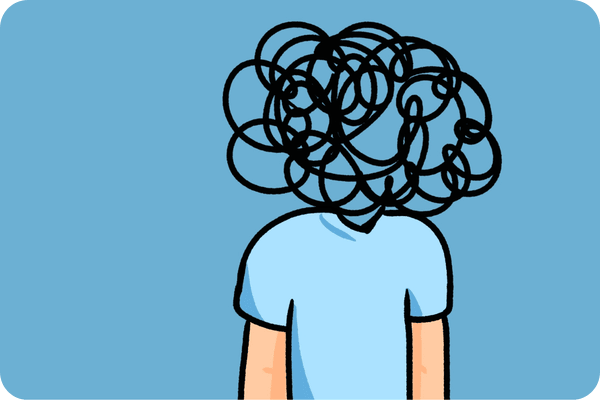
Do you ever have days where your brain just feels full?
You get home from a day that simultaneously flew by and yet felt like four days crammed into eight hours. You drive home, turn off the car, and just sit there for a minute — because you know going inside means your brain will have to make more decisions, and the last thing you want to do after making decisions all day long is think more.
You're not alone in that. And you're not losing your edge!
The more leadership responsibility you take on, the more your work becomes about thinking rather than just doing. And thought work drains you differently. Some days it feels almost more exhausting than pure physical labor because decisions cost something, and you made a few hundred of them before lunch.
Think back for a second to your first ever job.
It was probably much less complicated than what you do now. But you were also almost certainly given the exact tools you needed. If you mowed lawns, you had a mower. If you worked fast food, you were handed a spatula and shown how to drop the fries. If you worked in manufacturing, your supervisor gave you the tools. Maybe even a whole chest of them.
The job may not have been glamorous. But you didn't have to think much about how to do it well.
Then somebody handed you a team.
And I would bet all of Matt's next paycheck that the training was much less specific this time. I'd go even further and bet that nobody handed you a single tool to make the job of leading any easier.
You're in good company.
Research from the Chartered Management Institute found 82% of people who move into management do it with no real leadership training. Accidental managers, they call them.
But here's what makes the shift even harder. The work itself changes type. It moves from physical work to thought work, and those two require very different tools. The physical ones are obvious. Afterall, no supervisor would ask you to bolt down a weldment and not provide you the wrench.
I talk to managers all the time who are facing the challenges of leading people, feeling overwhelmed or like they're always behind. And the pattern I see over and over is not that they lack intention or even skill. They've just not been given the right tools...or shown how to use them.
And this is becoming more and more obvious in today's faster paced, AI-everywhere world. As more people fold AI into their workflows, studies are finding it isn't lightening workloads. It's making them more intense. Part of that comes from AI stripping out the simple, brain-dead tasks that were never fun but were easy. Which leaves work that asks more of your creativity and your judgment.
More thought work. Less of the other kind.
But I don't think this is bad news.
Because when the work gets heavier, the leverage moves.
It stops being about how hard you're willing to push and starts being about where you spend your best thinking. So what I'm hoping you notice is the wild opportunity that opens up for anyone paying attention. Not to work more, but to engage differently.
And the adjustment is smaller than you'd think. It isn't a system you buy or a course you take. It's nothing sexy — so unsexy most people walk right past it. It's how you spend the first few minutes of your day.
So how do you typically start yours? If you're like most of us, it almost certainly involves opening your email. Which means you start your day with everyone else's priorities before you've had a chance to name your own.
And that would be fine if every minute of the day carried the same weight. You'd just get to your priorities a little later.
But not all minutes are equal.
The first fifteen or twenty minutes of your workday are not just fifteen or twenty minutes. They're the only ones that get to decide what all the rest are for. Your attention is never more fully yours than right then. Your intention has never been cheaper to set. Everything after is downstream of a decision you either made on purpose or let get made for you.
So picture the version where you start on purpose.
You look at your calendar. You look at your task list. You choose what matters most today — two or three things, not twenty — and you block time to get them done.
Then you open your email.
And it may reorder things. If your boss has a hot item waiting in your inbox, that might genuinely outrank what you picked. Fine. Reorder it. That's not losing. That's choosing again with better information.
The difference is that you chose.
Start with email and you get pulled down a rabbit trail of quick answers and other people's priorities, and you're unlikely to recover. Not because you lack discipline. Because that's exactly what an inbox is built to do.
I told you it was unsexy. But here's the part that surprises people.
You'd expect starting your day on purpose to make you more organized. It does. But the bigger return is on the quality of your thinking. You do your hardest thought work while your brain is still fresh, instead of after forty small decisions have already fragmented it. Your output gets noticeably sharper, because you spent your best attention on the thing that deserved it.
And you get a scoreboard you can actually reach. At five o'clock the question stops being did I get it all done — which was never going to happen. It becomes did I start my day on purpose, and did I do the things I chose?
A few things to try this week
- Pick the time. Whatever time you actually walk in, block the first fifteen to twenty minutes as a recurring appointment. Not a good intention living in your head. An actual block that repeats.
- Tell your team. Something as simple as, "I'm starting my day with more focus, so I won't be answering email before 8:30." Most people will respect it. A few will be relieved, and copy you.
- Aim for most days, not every day. Emergencies happen. The goal was never a perfect streak. It's tilting the odds in your favor as often as possible.
Here's what becomes possible.
You walk into your day already knowing what matters, because you decided it before anyone asked you for anything. The important-but-not-urgent work finally has somewhere to happen. Your team knows when they get you. And you drive home with something left in the tank, because you spent your best thinking on the work that deserved it.
You were handed a job that runs on thought. To do it well, you need tools built for thought work.
Start with the first fifteen minutes. It's the smallest thing on the list, and it's the one that moves everything else.
Effective executives, in my observation, do not start with their tasks. They start with their time.
P.S. Decide what matters before you open your inbox. Everything after that gets easier.
Helpful resources.
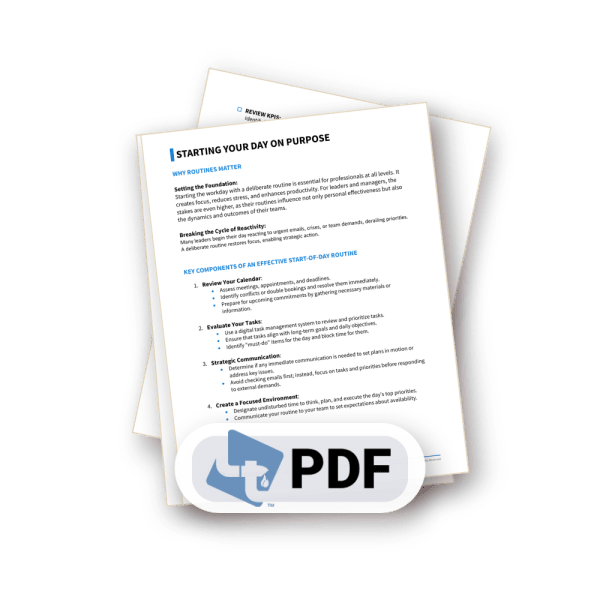
Start of Day Routine Quick Start Guide
How you start your day sets the tone for everything else. The Start of Day Routine Quick Reference is a simple checklist to help you focus, prioritize, and hit the ground running. It’s your morning momentum-builder.