Aunt Ruby Never Missed a Birthday
 Matt Metzger 4 min read
Let me tell you about my Aunt Ruby.
Ruby was my great-aunt. She lived into her early nineties and never married or had kids of her own. When your grandma is one of eleven siblings and your grandpa is one of eleven more (farm families… the workforce had to come from somewhere), you’re bound to end up with a few memorable great aunts and uncles.
Ruby was mine.
Many families in Almost-Amish country can be a little reserved with feelings. Not the Hoovers. And certainly not Ruby. She was loud and smiley and gregarious. She didn’t pinch cheeks or force hugs. She was just always there with a question, a grin, and a willingness to play euchre with a bunch of kids.
There's one thing everyone remembers about her.
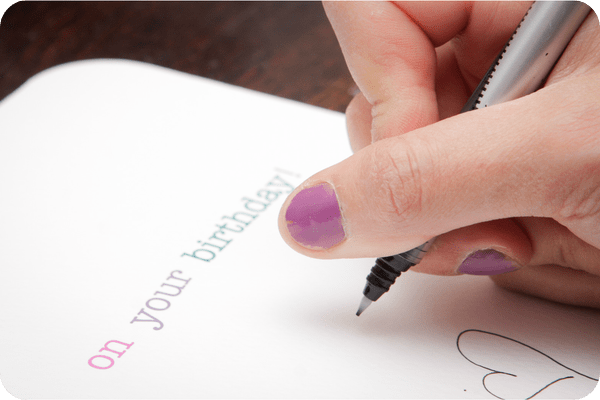
Your birthday card from Aunt Ruby always arrived on time. On the day (or the day before) every single year.
Remember, she had no kids of her own. So this wasn’t a handful of children and grandchildren. This was all of us: nine siblings, their kids, and their kids’ kids. Three generations. Nobody ever figured out whether she had an inside guy at the post office.
There was nothing elaborate inside. A sentence or two saying she loved you and happy birthday.
Somehow that was enough to make you feel like the only name on her list.
Ruby came back to mind recently while I was reading Neil Postman’s Amusing Ourselves to Death. Early on, Postman builds on Marshall McLuhan’s famous line, the medium is the message. The idea is that how we communicate carries as much weight as what we communicate. Change the channel, and you change the gravity of the whole conversation.
Think about all the ways to say happy birthday these days. The one-click social media wish. An emoji. A text. A text with the confetti effect (fancy). A GIF. A call. A store-bought card. A handwritten one. A quick “happy birthday!” in the hallway.
Then, way out at the far end, there’s the rarest version. Someone sits across from you and actually asks: What happened this year that mattered? How are you different than you were twelve months ago? What do you want to be true next year that isn’t true now?
Technically, it’s the same sentiment. But it’s a wildly different message.
When you sit face to face with someone and give them your full attention, you’re handing over the one resource you’ll never get back: your minutes. That says something no emoji can (even the party one).
Now bring it into your workday. Maybe you’re on lunch right now. Maybe you’re reading this to avoid a big project. (No judgment. Happy to be of service. )
Think about the people around you: the person you report to, your peers, the folks who report to you. Then think about the conversations coming up this week.
Are you intentionally matching the medium of conversation to the weight of the conversation?
A leader recently told me about a meeting he was planning, fifteen minutes to provide information that will move a project along. This may surprise some of you, but I talked him out of it. The project was already running. The team is in good standing. A quick note was exactly the right weight: “Heads up, nice work so far, here’s what we need to continue.”Bonus: it’s documented, with a timestamp.
Sometimes an email is the most respectful choice, because it honors everyone’s time.
On the other side of it, Josh and I were in a workshop recently. We were talking about the difference between equipping people, which helps them get today’s work done, and developing them, which helps them grow in capacity, competence, character, and trust. One of us said, a little off the cuff, that developing people usually isn’t the efficient choice.
A senior leader’s head popped right up. “What do you mean, not efficient?”
Here’s what we meant. It’s hard to name one intentional thing that genuinely grows a person that doesn’t take minutes of your time, face to face. In a world where AI can turn eight hours of work into three clicks, that’s becoming more true, not less. The efficient stuff keeps getting easier. The human stuff still asks for eye contact. That means recognizing someone’s dignity, celebrating a win, coaching them toward a better approach, and building trust in both directions.
It’s one of the habits we see again and again in leaders who get the most out of their people. They’re efficient where it serves and generous where it matters, and they know the difference.
Try this before your next conversation:
- Pause and weigh it. Before you type, ask what this moment actually carries. A logistics update and a growth conversation deserve different channels.
- Let small things stay small. For quick clarifications, reminders, and heads-ups, a clean email or message is often the kindest option. Equip efficiently.
- Give big things your minutes. Recognition, development, a hard conversation, a real “how are you doing?” all deserve time. Put fifteen minutes on the calendar, sit down, and put away the screen.
And if it lands somewhere in the middle, don’t underestimate a handwritten note.
Picture the people you lead a year from now. Ask them about the moments that shaped them, and they probably won’t mention the efficient ones. They’ll remember the leader who showed up, sat down, and made them feel seen.
That’s available to you this week, fifteen minutes at a time.
I can still picture Aunt Ruby’s signature.
You simply can’t think efficiency with people. You think effectiveness with people and efficiency with things.
P.S. Before your next conversation consider the most appropriate channel.
Helpful resources.
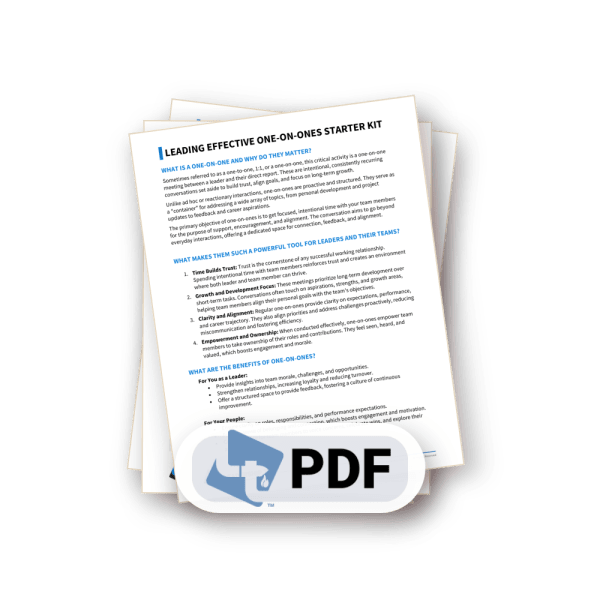
One-on-One Guide
Want a simple structure for those fifteen minutes? Grab our free One-on-One Guide worksheet: a few go-to questions that turn a check-in into a conversation that grows someone.